

 English
 русский

Electric Start vs. Pull Start: Which 9.9HP Outboard Engine Suits You?
The decision between electric start and pull start ranks among the early choices buyers face when selecting a 9.9HP outboard engine. Each configuration has its own set of advantages, and the right choice depends on how the engine will be used, who will operate it, and what kind of boating routine fits into daily life.
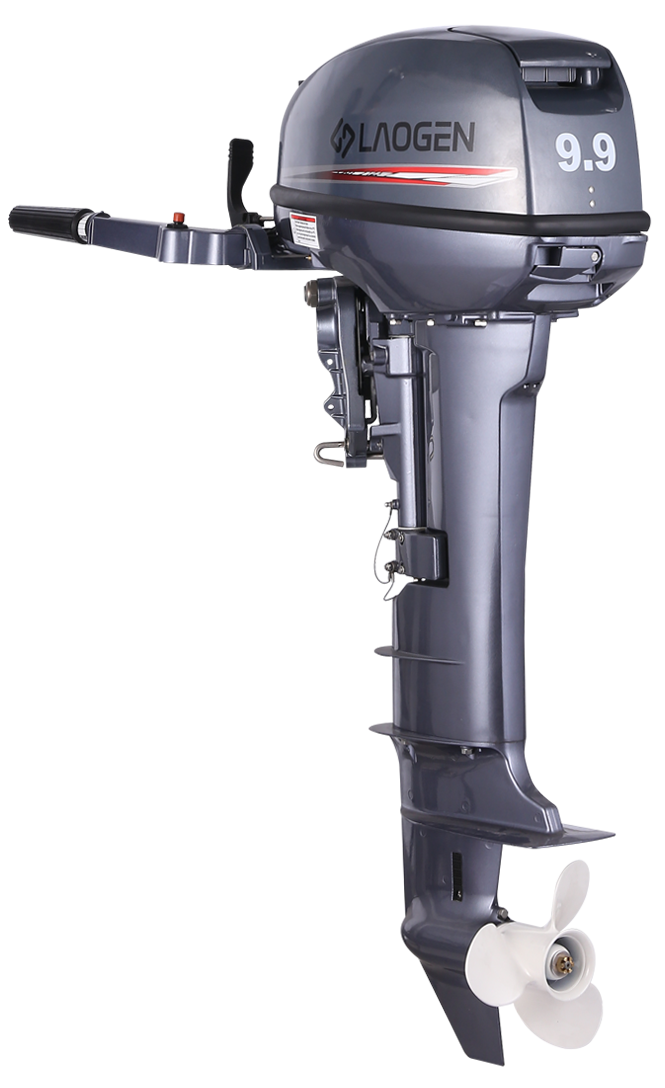
Understanding the Differences
Pull start, sometimes called manual start, relies on a recoil mechanism and the operator’s physical effort to turn the engine over. This approach has been used for decades and remains popular for its mechanical simplicity. Electric start uses a battery-powered starter motor, similar to what is found in automobiles, to crank the engine at the turn of a key or the press of a button.
Beyond the starting method itself, these two configurations carry implications for weight, maintenance, and the overall experience of launching and retrieving the boat.
When Pull Start Makes Sense
For owners who prioritize simplicity and light weight, pull start holds considerable appeal. Removing the battery and starter motor reduces the total weight by a noticeable margin. This difference matters to those who frequently lift their engine onto the transom by hand, transport it in a vehicle, or store it in a garage where space is limited.
Pull-start systems also eliminate the need to maintain a battery. There is no battery to charge, no terminals to keep clean, and no concern about a depleted battery leaving the operator unable to start the engine. For boats without electrical systems—such as small inflatables or basic jon boats—this simplicity aligns well with the vessel’s overall character.
Operators who are comfortable with the technique of starting a small engine using a pull cord often find the process quick and reliable. A well-tuned engine with a properly adjusted choke usually starts within a few pulls, even when cold.
When Electric Start Offers Benefits
Electric start appeals to those who value convenience, particularly in situations where repeated starting occurs throughout the day. Anchoring, fishing, restarting, and moving to a new spot become less physically demanding when a button press replaces pulling a cord. For boaters who share duties with family members who may find pulling-starting difficult, an electric start makes the experience more accessible.
The presence of a battery also opens possibilities beyond starting. Navigation lights, fish finders, and other electronics can draw power from the same battery, simplifying the electrical system on smaller boats. Some electric-start models include charging capability that replenishes the battery while the engine runs, keeping the electrical system ready for the next outing.
Cold-weather starting represents another area where electric start excels. On cool mornings when engines can be reluctant to fire, the consistent cranking of a starter motor often proves more effective than repeated manual pulls.
Hybrid Options
Some models offer both starting methods on the same engine. This configuration provides a backup: if the battery loses its charge, the pull start remains available. Hybrid setups appeal to those who want the convenience of electric start but prefer having a fallback option for peace of mind.
The added weight of the starter motor and battery still exists in hybrid configurations, so the portability advantage of a pure pull-start engine is not fully retained. However, for owners who keep their engine mounted on a boat trailer rather than carrying it frequently, the weight difference becomes less significant.
Making the Choice
Selecting between electric and pull start involves considering physical demands, boating frequency, and the boat’s existing systems. An operator who handles the engine alone, lifts it on and off frequently, and uses a simple boat may find a pull start perfectly adequate. A boater who starts and stops many times in a day, shares operation with others, or already maintains a battery for electronics may appreciate the convenience of an electric start.
Neither approach is inherently superior; each suits different patterns of use. Observing how one actually uses the boat—not just how one imagines using it—often clarifies which starting method will prove satisfying over seasons of ownership.

Get in touch

- Phone: +86-13606682703
- Email: [email protected]
- Tel:
- Add: Lingang Industrial Park, Jiantiao Town, Sanmen County, Taizhou City, Zhejiang Province, China.


